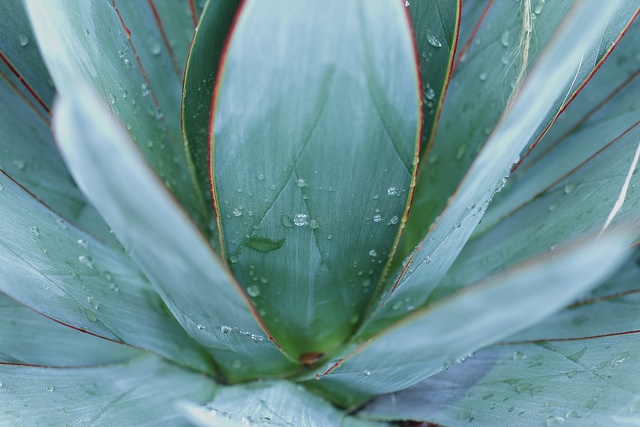
Ahh…agave.
Nectar of the gods. Traditional sweetener dating back thousands of years. The healthiest sugar substitute a diabetic can hope for.
Right?
Sorry, you’ve been duped.
Last week in our discussion of healthy sweeteners, I briefly mentioned that agave nectar absolutely does NOT belong on our list of natural alternatives to processed sugar.
Agave nectar, syrup, or sugar is a highly processed substance that is not in any way the same traditional food from which its manufacturers drew the inspiration to market it. Virtually none of the claims they make about it are even remotely true.
The giant food companies who came up with this farce did so in an attempt to fool us all into thinking that what they’re selling is this magical “nectar” from a mystical Mexican plant which — of equal mystique — has a unequivocally low glycemic index, is 100% “natural” and “healthy,” and “traditional,” and ought to be considered the ultimate in sugar substitution for the health-conscious consumer.
Why would they say such things if that’s not at all true?
…Let’s take a guess at this one.
.
.
…”because it makes them lots of money?”
DINGDINGDINGDING!
We have a winner.
The Agave Scam: Worse than Regular Sugar and High Fructose Corn Syrup

There’s literally an entire shelf of this junk at my favorite tiny little hippie health food store. For shame…
We’re all pretty familiar with how nasty, unnatural, and highly processed high fructose corn syrup is — unless of course, you’re gullible enough to believe one of these ads (from the people that SELL THE STUFF.)
But did you know that the process in which they create agave syrup is the exact same one by which high fructose corn syrup is produced?
That’s right. All that chemically-intensive, factory-made fakeness applies to manufactured agave “nectar” just as much as HFCS. Using all sorts of toxic chemicals, caustic acids, and genetically-modified enzymes, they take the starch of the root bulb from the agave plant, and, just like with the starch from corn, put it through the processing ringer transforming it almost the exact same way into not much more than free synthetic fructose and a bunch of chemicals.
What’s wrong with fructose, you say? After all — fruit has fructose!
Not this kind.
I definitely don’t have a problem with natural fructose. Fruit actually has levulose, a form of fructose bound naturally to all kinds of fibers, amino acids, vitamins, minerals, pectin, and even fatty acids. Manufactured fructose is an isolated compound which is free-formed, and not bound to these kinds of things which make the sugar digestible.
The big reason that the processed, refined fructose in HCFS is so unhealthy is because it’s something so completely unnatural and foreign that your body doesn’t really know what to do with it — so unrecognizable, that it cannot even be digested in your intestine! Actually, it can cause quite a bit of inflammation in your GI tract and permeate the intestinal walls, causing leaky gut. This unbound fructose is metabolized in your liver, where it can rapidly turn into (potentially heart-disease-inducing) triglycerides and adipose fatty tissue. Makes you obese and then kills you off with a heart attack. Lovely.
So, high fructose corn syrup contains 55 percent fructose, the rest being glucose, together they make one seriously potent disaccharide. But again, the synthetically isolated fructose is the major culprit of the health issues.
Agave nectar is, at minimum, 70 percent fructose. 70!
Some brands are as high as 90%. You don’t find levels of fructose like that in natural fruit, or truly natural sweeteners like honey or sucanat.
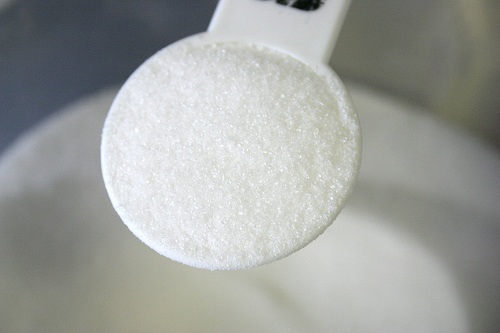
You would honestly, truthfully be better off eating this instead of agave nectar:
Oh, and get this — Even the FDA isn’t buying it!
Incredibly, even a concerned agent within the Food and Drug Administration itself was troubled enough by the marketing of this new fake food to write up a confidential letter explaining that agave “nectar” should be labeled “HYDROLYZED INULIN SYRUP” — to more accurately represent what the product actually is!
Holy drugged-up-and-standing-in-a-lagoon-of-its-own-defecation COW! Was that a government agency actually expressing concern for the American public’s health and safety?!
Hmm… hence the reason why the letter is “confidential.”
I digress.
But can we at least start referring to the “nectar” as “hydrolyzed inulin syrup” anyway? I’m gonna. (Well except in this post — I want Google to pick up on the mislabeled buzzword so that more people find out the truth about this stuff!)
When Sweet Becomes Dangerous
The problems with agave go beyond it just being a sorry excuse for a “natural” sweetener. Like I mentioned last week, it’s actually very hazardous to your health. I’m not just talking about the danger of developing diabetes, obesity, or heart disease — though, of course, those are very serious health conditions. And the consumption of high fructose corn syrup, which has less of the inflammation-inducing synthetic fructose than agave, has been strongly linked to them.
But what I’m talking about here, is specific to agave “nectar.” Agave contains highly unsafe levels of saponins — toxic steroid derivatives which disrupt red blood cells causing, in milder cases, diarrhea and vomiting, but much more seriously — unsafe pregnancies resulting in miscarriage.
Does this sound like something you ought to be putting into your body?
“But, but! MY agave is raw, and natural, and really is that healthy nectar flowing from a magical blue plant!”
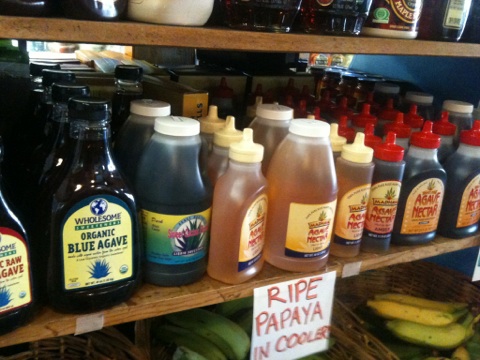
See?! It’s blue! And they SAID it’s 100% natural!
Sorry to burst your magical blue bubble, but…
- Raw? Nope. Yet another trick of the corporate food trade, they can go right ahead and slap a “raw” label on products that have, in fact, been heated to high temperatures, and no one will say anything about it. Just like with honey, if the product hasn’t been heated to the point of pasteurization (160 degrees), they can and will label it “raw.” But it absolutely, positively, has been cooked. You know how there’s different colors of agave syrup? Some are a darker, more richer-looking amber color? That’s the stuff that they accidentally burnt, due to poor quality control in the factories. The syrup turns brown when heated past 140 degrees. So what do they do with this charred syrup they churned up? They sell it to you as “amber” or “chicory” agave. How special! Mmm. Burnt fructose. But ironically, the way the traditional agave nectar is made in Mexico requires boiling down agave juice to create the nectar—so, “real” agave isn’t actually raw, at all!
- Natural? Nuh-uh. Natural syrup made from the nectar of the agave plant is definitely not what you’re finding at the health food store. It’s a highly processed, unnatural edible substance. Even if you manage to find agave syrup that actually is made from the sap, and not the starch, it’s not in it’s natural form.
- Real agave nectar? Highly, highly unlikely. If you could have fed a small army for a week with what you paid for your precious agave, and you literally watched it carted across the Mexican border by a donkey-toting farmer, okay — maybe. Also, does it taste really, really weird and/or gross? There might be a minuscule chance that it is, actually, agave nectar — the stuff that was actually made by Mexican farmers, not in a factory.
The traditional food that marketers drew their inspiration from to make synthetic agave nectar hydrolyzed high-fructose inulin syrup, is called miel de agave. It was traditionally made in Mexican cultures from a big, giant, at least 8-year-old agave plant that produces a fruit-like “heart” in the middle of these huge leaves, from which they extract juice, boil it down, and ferment it to create a sap-like syrup, unique to the indigenous peoples of Mexico.
There is not any one company which commercially produces miel de agave in this traditional way. There are, however, two companies that actually do make their agave from the sap of the plant, rather than the starch of the root bulb, however, they still process it to boil the sap down to an even more concentrated sugar. It’s not in any way better for you than just plain old cane sugar.
If you’re really, really convinced that your particular brand of magical “nectar” is 100% legit and not at all this factory-processed, HFCS-like stuff I’ve explained here— okay, fine—let me just give you the benefit of the doubt and nod in agreement that it is indeed what it claims. We cool now?
The fact remains that the stuff is processed, concentrated fructose. Regardless of where it came from, or how it got to that state. I’m not trying to spark an irrational fear of fructose, but it can be damaging to the body when consumed in excess, and concentrated fructose is by definition, an excessive amount. It would be especially easy to overdo it on concentrated fructose when you’re regarding the stuff as a health food. Not recommended.
“Oh, but, I’m diabetic! Agave is low-glycemic, and my doctor says it’s best for my insulin levels.”
Remember how we talked about the isolated synthetic fructose actually being metabolized in the liver rather than in the intestine? And that the sugar gets converted into triglycerides and fatty tissue? Well, by default, that means it’s not being converted into blood glucose. Which, yes, is something diabetics want to avoid disrupting.
But let’s not forget the reasons why synthetic fructose is so harmful. Yet another reason is that it inhibits the production of leptin — the hormone responsible for regulating hunger. So, the more isolated fructose you consume, the greater chance you have of developing obesity. Yeah. Cause that’s real great for diabetics.
I’ll take my syrup from a tree, thanks.
If you want syrup, a better idea is either genuine, organic maple syrup tapped straight from the tree, or coconut nectar, made from the sap of the coconut palm.
Real, whole maple syrup

Coconut nectar, or coconut syrup, truly is a low-glycemic sweetener (GI of 35) that won’t mess with your liver, pancreas, blood glucose, triglycerides, or adipose tissue in the way that agave and high fructose corn syrup does. It’s  also rich in minerals, amino acids, and vitamins C and B. Just be careful that you’re not buying a coconut-flavored fake syrup (those are usually sweetened with HCFS). You can find the real deal from this brand here
Find these even more natural sweeteners, like raw honey, here at the Village Green Marketplace.
Have you been duped by agave? Isn’t it awful how they’ve tried to pull the wool over our eyes with this?
And is agave absolutely everywhere in the health food stores in your area, too? What are your favorite alternative sweeteners to use instead that are actually healthy?
(Oh and also, sorry for having the sass-dar on super high today. I’ve seen people get weirdly defensive about this agave stuff and I thought I’d cut the naysayers to the chase. Consider yourselves cut.)
[disclosure: cmp.ly/4; cmp.ly/5]



Thank you for all of the wonderful information. I never bought into the Agave hype and have never used the stuff. I’ll stick with traditional sweeteners that have been used for centuries… not the newest fad sweetener. Maple syrup, honey, and unrefined sugar are the sweeteners for my family… in small amounts!
I won’t get any sweeteners, mostly because I don’t need them in general. I can live my whole life without maple syrup, or any kind of syrup for that matter.
It’s good to know that you’re at least spreading the word about HFCS and “Agave Nectar”
OH MY STARS (to quote Bewitched)!!!!!! I’m so mad I’m seeing stars! I wholeheartedly agreed with everything you said in this post a few months ago and then I read on a website (which shall remain unnamed, but forever boycotted) that Agave Nectar wasn’t really ALL THAT BAD. Sheesh! What a complete dummy I am! That bottle in my pantry is going to be poured right down the drain today!!!
Thanks for setting me straight, AGAIN!!!!!
This is great info! It is so hard to stay on top of all the “new products” on the shelves… which is why I despise shopping in general. Although I’d rather not use sweeteners at all, my kids have been poisoned (literally and figuratively) by the other kids at school who so kindly introduce them to fake food (and poke fun at my homemade bread). I do my best to substitute homemade for packaged whenever I can, but even healthier snacks do require some sweetening. I’m happy I didn’t get sucked into the Agave Nectar marketing and I will read more on your site about better quality alternatives!
Great article Emily. 🙂 Keep it up!
just so you know i love your writing!
Great post! I picked up on of the free magazines from the local health food stores the other day and Agave Syrup was featured in a whole page advertisement. It’s crazy how they promote it as being a healthy alternative.
Emily, I want to be like you when I grow up! 😉 Great post and you are wicked funny!
Keep the sass-dar on high! I love it! 😉
I quit using agave about a year ago when I started learning some of what you posted on. I just didn’t want to risk it. Especially when maple syrup tastes so much better! I’m so thankful to have this post to reference now–and send to other people!
I’m so glad to have found this article, thank you! I was (falsely) under the assumption that agave was better for you, like many others. I’m just starting my whole-food journey and like to do research on anything/everything now. I’ve never bought any Agave nectar and I’m so glad I resisted the urge. It’s ridiculously overpriced anyway, so the people using it are paying MORE to destroy their health! BTW, I like sassy people, so I loved this whole thing, LOL! Thanks for enlightening me! Have a happy new year!
Just found you and already love your blog. My mother just gave me her bottle of this “stuff” because she was not using it, but tonight it is going in the trash! Thank you for the awesome article!
Oh that makes me happy! Thanks so much for your comment, Olivia!
Hi! I am frankly disgusted and more perplexed than anything as to how these companies get away with labeling their agave produce as Certified Organic (whatever country it happens to be). My agave syrup is “lovingearth” Raw Organic Agave Syrup. Here is their website: http://www.lovingearth.net/products
For some reason, it is certified organic in Australia although it is a product of Mexico, so perhaps they get different ratings depending on the country they ship to.
I am completely and utterly confused after looking at their website as they look kind of legitimate with all of their products.
Please help, I am legitimately angry/scared at how little a certified organic rating is beginning to mean to me (which also makes me feel stupid for being hoodwinked by a government rating).
So, I bought Agave about 6 months ago, tried some in my coffee and got so sick I was in bed for a whole afternoon (dizziness/nauseous). Wish I would have read this article before going to the store….The bottle of agave I have is certified USDA and certified organic by the Colorado Dept. of Agriculture too. This makes me sad.
OK so having recently fallen in to the Agave trap, believing the hype and all…what are good natural sweeteners that are safe? What I am aware of is honey, I thought raw sugar, tree tapped maple syrup, and stevia. Am I wrong or are there others?
Thanks bunches for the advice.
Hi Heather, good question. Well, the coconut nectar and real maple syrup I linked to in the post are good ones. And yeah, honey is great too, especially when it’s raw and locally-produced. But I really wasn’t kidding when I pointed out that white sugar would be a better choice than agave. If you use organic (non-organic sugar is commonly GMO) cane sugar now and again, it’s really not the end of the world. Oh, and I wouldn’t bother with “raw” sugar — it’s usually not raw in the least. Sucanat, or dehydrated sugar cane juice is a different story, and is a good, wholesome sweetener. (The Rapadura brand is great.)
There are some other, weirder natural sweeteners out there like malted barley syrup, unsulphured molasses, and date sugar (you can make that one yourself), but I personally don’t go out of my way to use them very often.
Thanks for the suggestions. What we really need to do though is try to get away from sweetening things altogether 😉
Oh that darn chocolate and chocolate chip cookie that scream my name…
I’ve actually relaxed my stance on sugar quite a bit since writing this post. Sugar can have some very powerful anti-stress effects on your endocrine system and can be used as a tool for rehabilitating the metabolism. I wouldn’t throw away those chocolate chip cookies quite yet if I were you… 😉
Oh My God!!!
And I have been buying it all these years thinking it was much better than aspartame loaded sweeteners.
Shocking truth- an eye opener in more ways than one!
Thanks for the information!
Will keep coming back for more. 🙂
I’m wondering if you can provide us with some sources for your information on the unhealthiness of agave, the ability to call something raw and organic when it is not. Although I have been reading similar claims through Dr Mercola’s website for some time, I’ve not found anything to back any of this up.
I used to use agave but now only use raw honey or dates as a sweetener. How do you know that coconut nectar is better and is processed at low temperatures? To me it’s still a processed sugar.
I got duped into Agave a few years back. After 2 years of only using it to sweeten my tea, a visit to my dentist revealed $10,000 in tooth decay. I was in shock. How could this’healthy’ alternative cause such a rotten mouth?
Agave is horrible stuff and should be taken from the shelves immediately.
I wouldn’t touch the stuff with a barge pole. I have fructose malabsorption and it would make me very sick with its high levels of fructose. Plain sugar is much better because it is 50/50 fructose and glucose. The glucose molecules hold the hands of the fructose molecules and pull them through the walls of the intestine. The issue arises when the fructose is higher than the glucose content and it floats on down into the large intestine where it is viewed as an intruder and causes all sorts of problems. No agave nectar for me!
★★★
BRAVO!!
I’ve been on Insulin for about 5 years now.
I WON’T LIE. Having Diabetes is a REAL PAIN
in the belly, arm, thigh. 😉 Yep. It gets old
really fast. Lightning fast. I want (and enjoy)
SUPER HEALTHY foods. Vegetables, fruits, etc.
HOWEVER, when on a VERY, VERY limited
income, well, need I say more?
$50 per WEEK for food for 3 people, all adult size
…………18 & older, makes it VERY difficult.
VERY. If anyone has any thoughts or
ideas, PLEASE, PLEASE TAG my full name and
let me know WHAT your TIPS/ADVICE is.
I have ONE *Better Boy* Tomato plant planted.
That’s it. I couldn’t afford any more.
My daughter will only eat green beans, corn potatoes.
That’s it, as far as veggies go. Me & my Son?
We enjoy ALL veggies.
Thank you for your help.
PS TAG my full name.
and age
I know you cant hear it, but I am screaming in outrage and frustration right now. I have spent a small fortune on agave, which I really could not afford, over the years. I thought it was so much healthier. But once again, Ive been robbed of my money and my health. Sigh…. But I do have a question. I read somewhere recently that the government allows maple syrup manufacturers to use corn syrup flavored with maple flavoring to be labeled as pure maple syrup, so I havent felt comfortable with that either. And it seems if you do buy from a reputable farm, it costs so much its not affordable for me. So whats left? I just dont think I can live with no sweet anything. Thank you though for the information, as dissapointing as it is.
Just a thought, but Maple Syrup’s primary sugar is Sucrose which one molecule of Sucrose = one molecule Glucose + one molecule of Fructose. So it appears to me that you’ve made a pretty big misrepresentation of the Fructose content of Sucrose. And your body is very efficient at unhitching the glucose the from the fructose (hydrolyzing) and it is metabolized the same way. If you changed the molecule at all it would no longer be fructose, if that makes sense. I’m not saying there is no truth in what you wrote in the entire article, but just be careful about making very passionate claims which may just be a twisting of the truth, as is the case with the fructose content of various foods. Do you mean pure fructose or fructose bound to sucrose? And your body can metabolize pure fructose but it has a threshold for absorption which can be exceed if consuming very sugary foods (sucrose or pure fructose) which in that case will pass through your GI tract undigested causing some level of inflammation.
Thank you, great article! One important correction in regards to maple syrup though…
I should point out that my ex’s family runs a sugarbush in northern Québec, and It takes 20 – 50 liters of maple sap being boiled down for hours to make just one liter of Maple Syrup. The sugar levels are very high because most of the water has been boiled out so that it doesn’t spoil.
Although I don’t disagree that sugar is fine in moderation, I’d like to caution people that every sugarbush working/owning member of his family
over the age of 50 (both related and married into) has developed diabetes and that’s pretty much the only sweetener they use. It has nearly the same sucrose content as sugar.